Leksikal Flare Font Family & Specimen - Tokotype

Leksikal Flare

Leksikal Flare

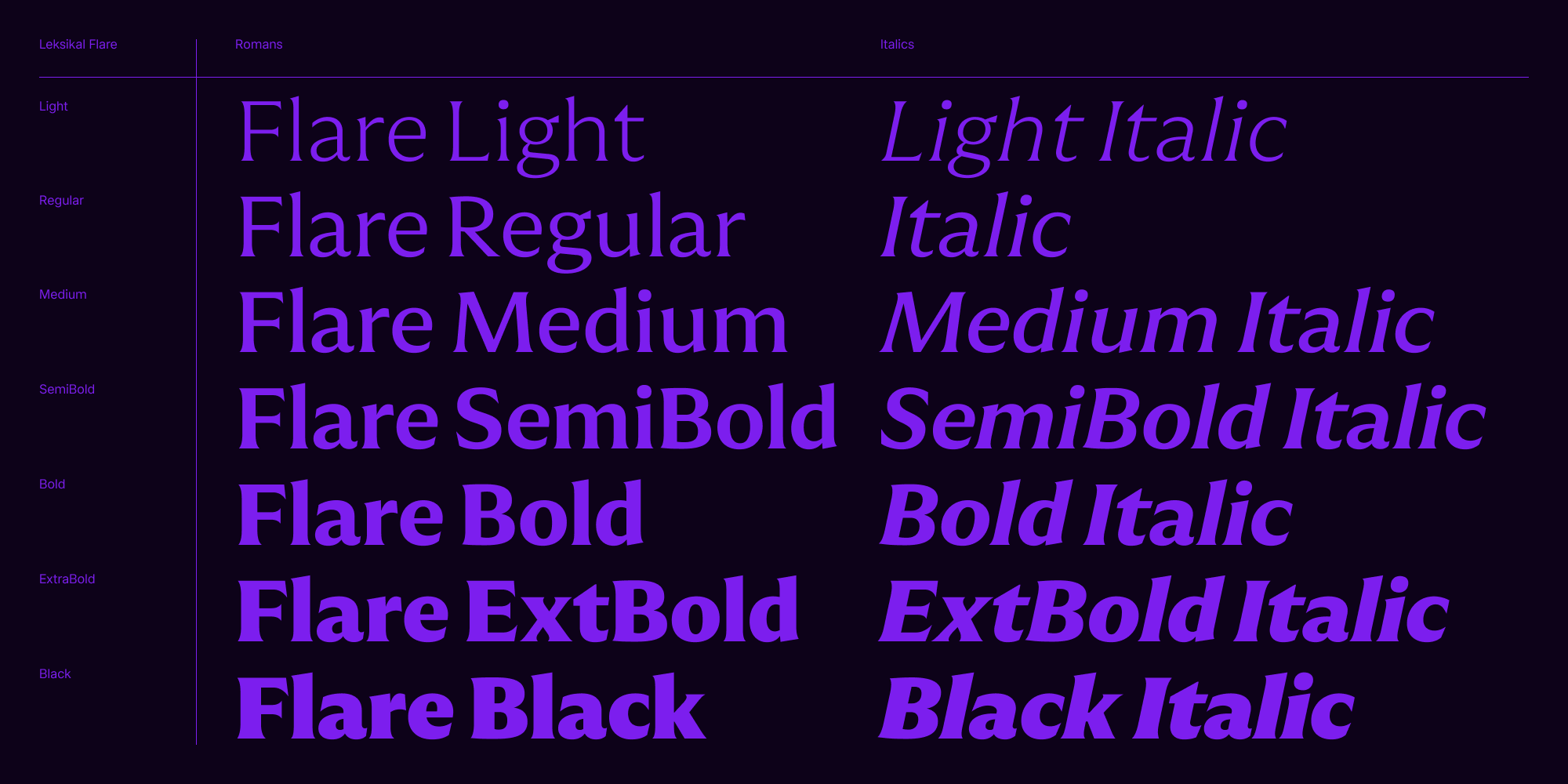
Leksikal Flare Styles

Uprights

Light

Regular

Medium

SemiBold

Bold

ExtraBold

Black

Leksikal Flare Styles

Italics

Light Italic

Italic

Medium Italic

SemiBold Italic

Bold Italic

ExtraBold Italic

Black Italic

Variable

400px

0px

1em

Artificiality

400px

0px

1em

Generalities

400px

0px

1em

Discotheque

400px

0px

1em

Stakeholders

48px

0px

1.2em

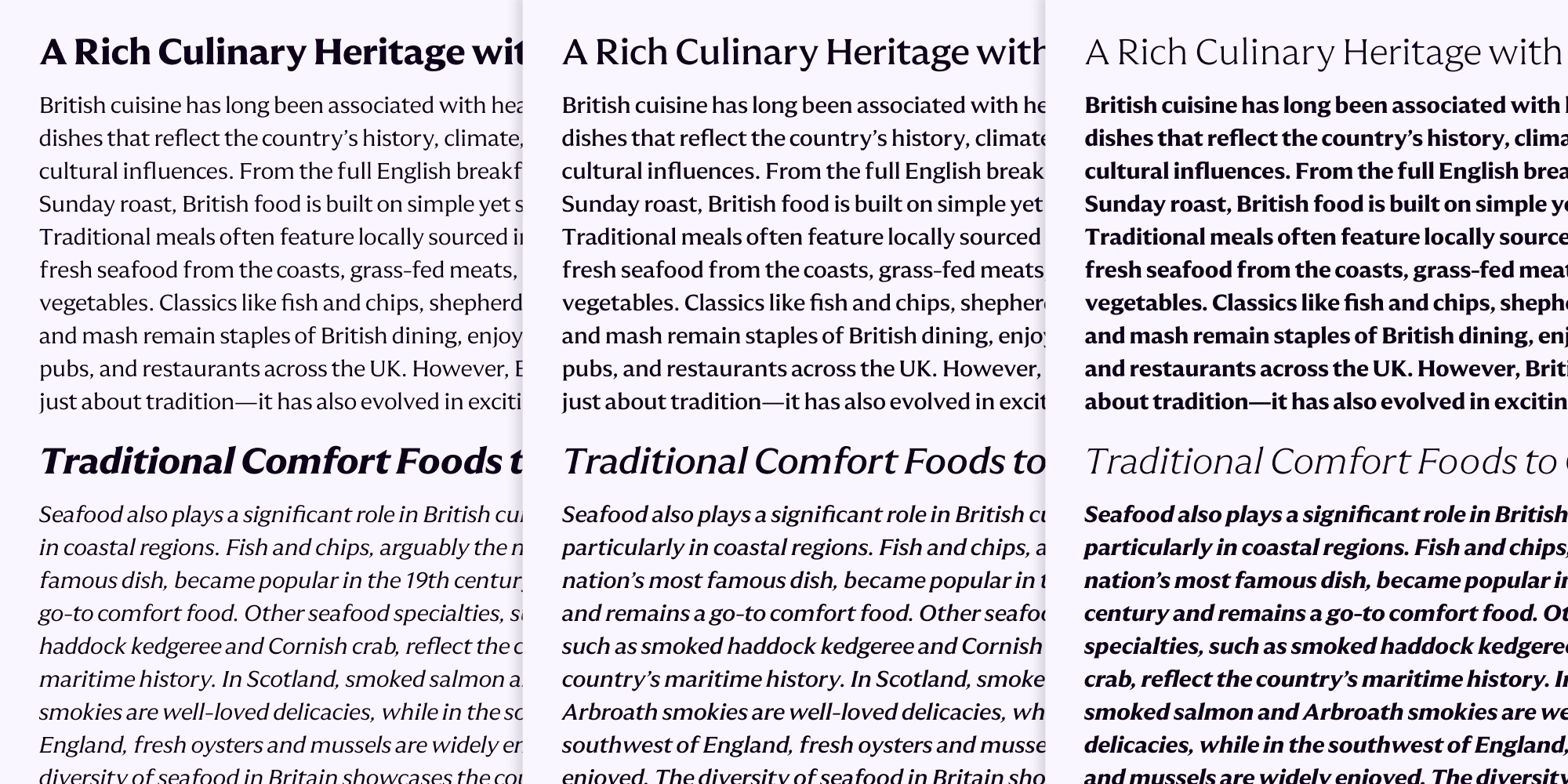
A lexical set is a group of words that share a particular vowel or consonant sound. A phoneme is a basic unit of sound in a language that can distinguish one word from another. Most commonly, following the work of phonetician John C. Wells, a lexical set is a class of words in a language that share a certain vowel phoneme.

24px

0px

1.4em

A lexical set is a group of words that share a particular vowel or consonant sound. A phoneme is a basic unit of sound in a language that can distinguish one word from another. Most commonly, following the work of phonetician John C. Wells, a lexical set is a class of words in a language that share a certain vowel phoneme. As Wells himself says, lexical sets "enable one to refer concisely to large groups of words which tend to share the same vowel, and to the vowel which they share". For instance, the pronunciation of the vowel in cup, luck, sun, blood, glove, and tough may vary in different English dialects but is usually consistent within each dialect and so the category of words forms a lexical set, which Wells, for ease, calls the STRUT set. Meanwhile, words like bid, cliff, limb, miss, etc. form a separate lexical set: Wells's KIT set. Originally, Wells developed 24 such labels—keywords—for the vowel lexical sets of English, which have been sometimes modified and expanded by himself or other scholars for various reasons. Lexical sets have also been used to describe the vowels of other languages, such as French, Irish and Scots. There are several reasons why lexical sets are useful. Scholars of phonetics often use abstract symbols (most universally today, those of the International Phonetic Alphabet) to transcribe phonemes, but they may follow different transcribing conventions or rely on implicit assumptions in their exact choice of symbols. One convenience of lexical sets is their tendency to avoid these conventions or assumptions. Instead, Wells explains, they "make use of keywords intended to be unmistakable no matter what accent one says them in". That makes them useful for examining phonemes within an accent, comparing and contrasting different accents, and capturing how phonemes may be differently distributed based on accent. A further benefit is that people with no background in phonetics can identify a phoneme not by learned symbols or technical jargon but by its simple keyword (like STRUT or KIT in the above examples).

16px

0px

1.4em

Bilingual lexical access is an area of psycholinguistics that studies the activation or retrieval process of the mental lexicon for bilingual people. Bilingual lexical access can be understood as all aspects of the word processing, including all of the mental activity from the time when a word from one language is perceived to the time when all its lexical knowledge from the target language is available. Research in this field seeks to fully understand these mental processes. Bilingual individuals have two mental lexical representations for an item or concept and can successfully select words from one language without significant interference from the other language. It is the field's goal to understand whether these dual representations interact or affect one another. Bilingual lexical access researchers focus on the control mechanisms bilinguals use to suppress the language not in use when in a monolingual mode and the degree to which the related representations within the language not in use are activated. For example, when a Dutch-English bilingual is asked to name a picture of a dog in English, they will come up with the English word dog. Bilingual lexical access is the mental process that underlies this seemingly simple task: the process that makes the connection between the idea of a dog and the word dog in the target language. While activating the English word dog, its Dutch equivalent (hond) is most likely also in a state of activation. Early research of bilingual lexical access was based on theories of monolingual lexical access. These theories relied mainly upon generalizations without specifying how lexical access works. Subsequent advancement in medical science has improved understanding of psycholinguistics, resulting in more detailed research and a deeper understanding of language production. "Many early studies of second language acquisition focused on the morphosyntactic development of learners and the general finding was that bound morphemes appear in the same order in the first and second language". In addition, "second language learners are also able to produce and process simple sentences before complex sentences (Pienemann et al. 2005), just like first language learners", of which there are 2 models proposed: serial search models and parallel access models. Serial search models propose that when monolinguals encounter a word, they will look through all the lexical entries to distinguish whether the input item is a word or not; if it is, they will only retrieve the necessary information about that word (i.e., its semantics or orthography). Lexical access is accessed sequentially, with one item at a time. In contrast, the parallel access models approach asserts that multiple entries can be activated at once, which means that the perceptual input from a word would activate all lexical items directly, even though some of them might not be necessary. In this way, numbers of potential candidates would be activated simultaneously and then the lexical candidates which are most consistent with the input stimulus would be chosen. Researchers addressed that both the serial and parallel processes are used for lexical organization and lexical access.
Solid Outline
Glyph Name
Character Name
Unicode Decimal
Unicode Hex

About Font

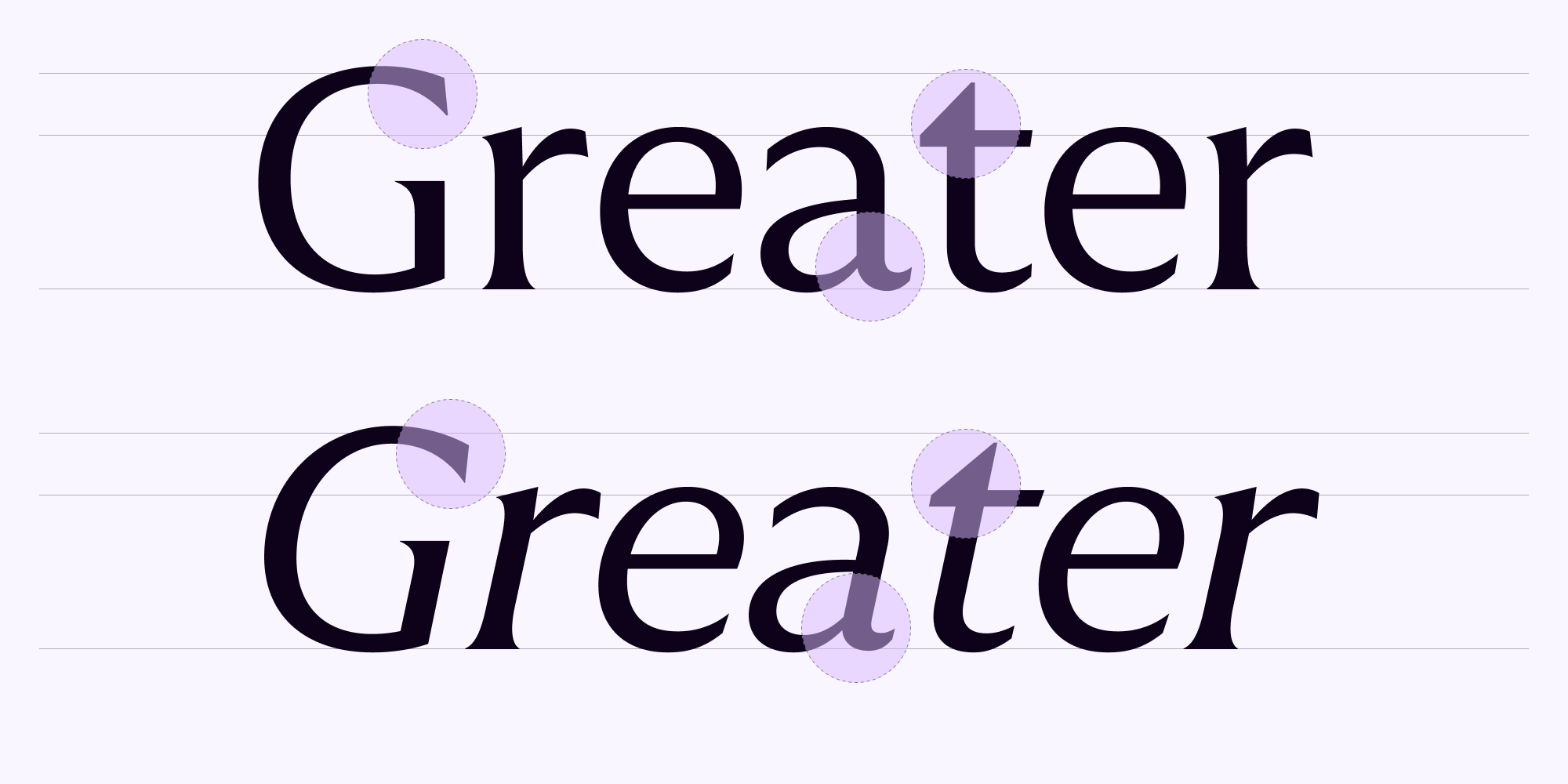
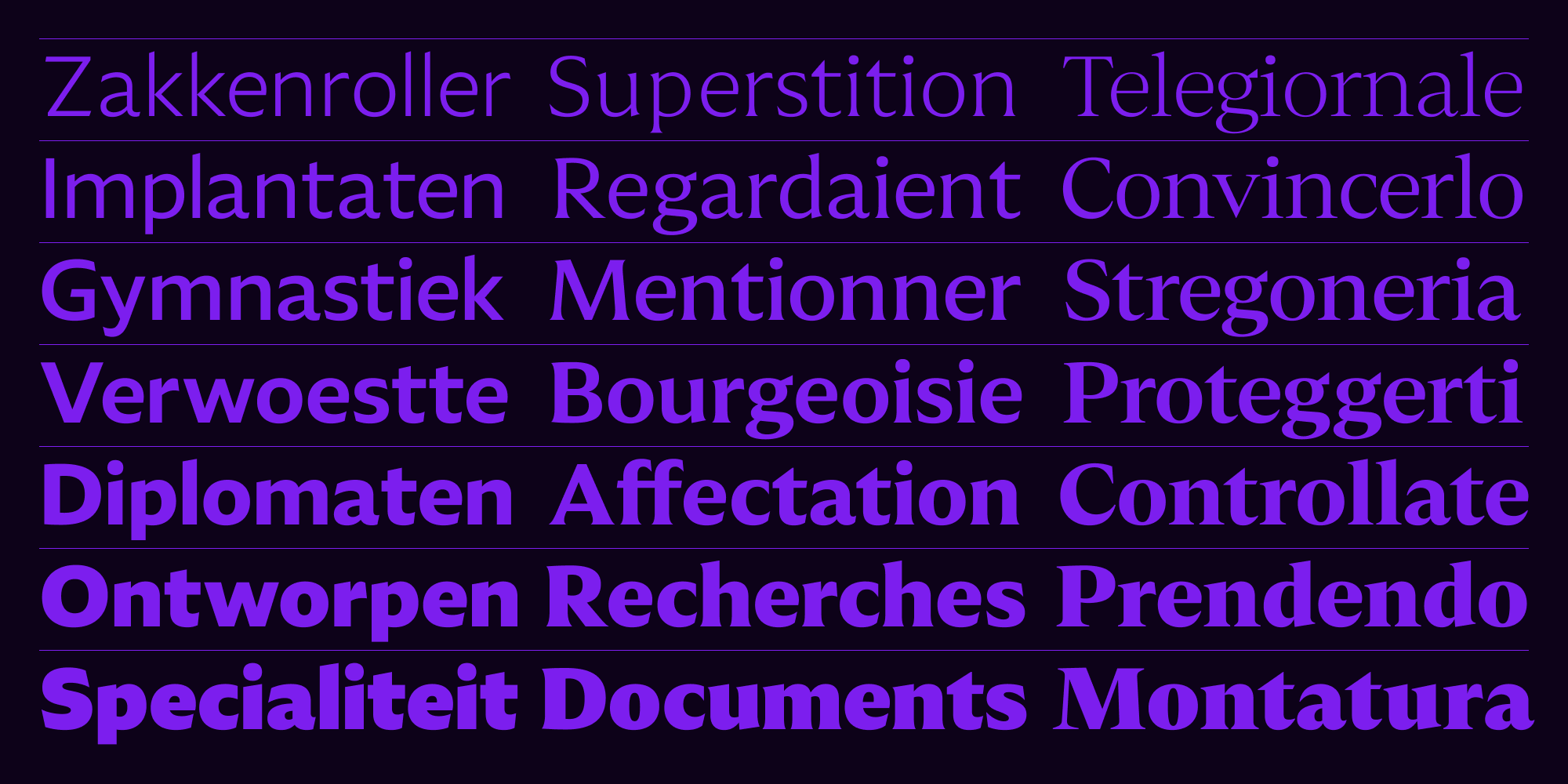
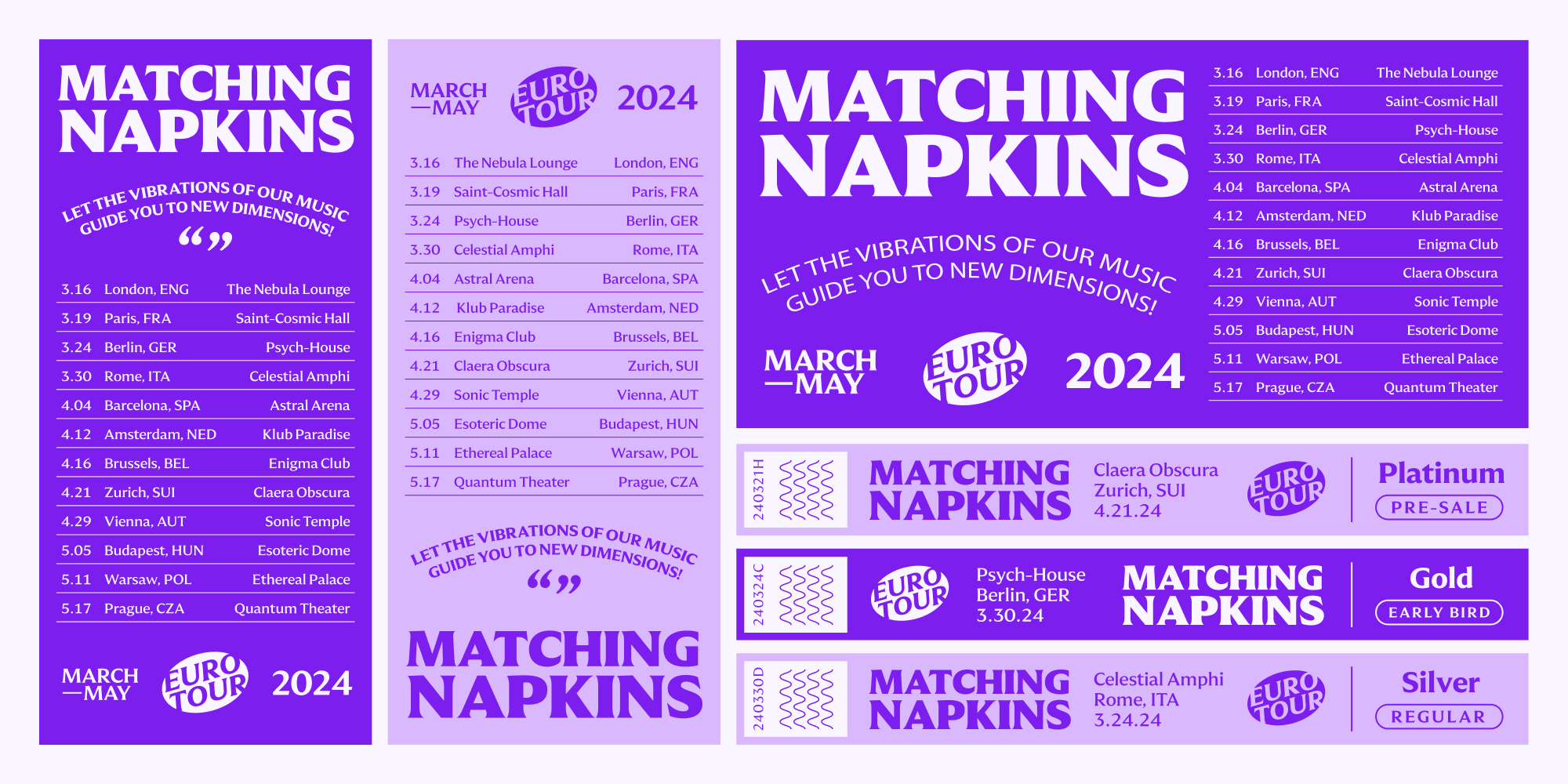
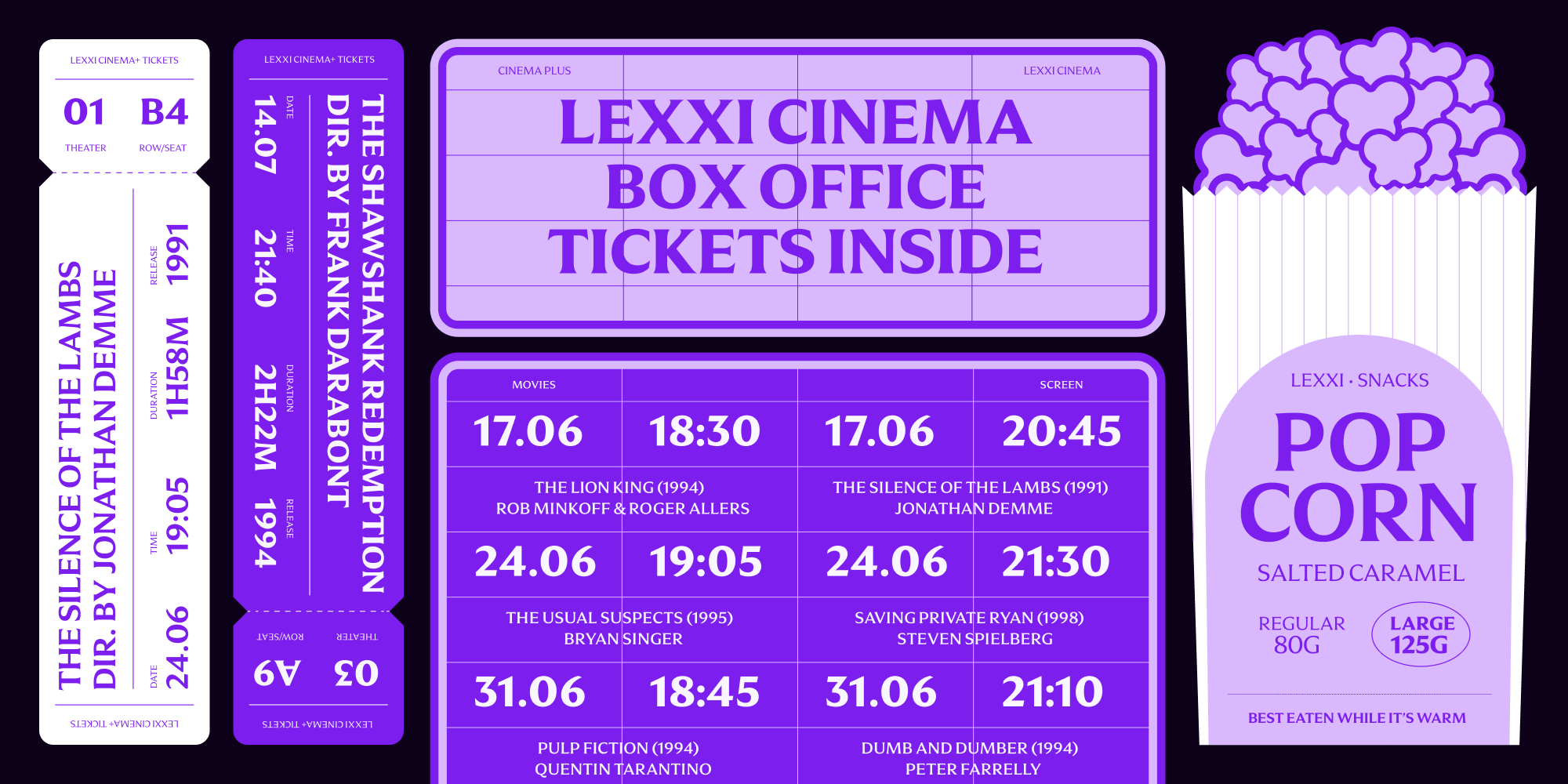
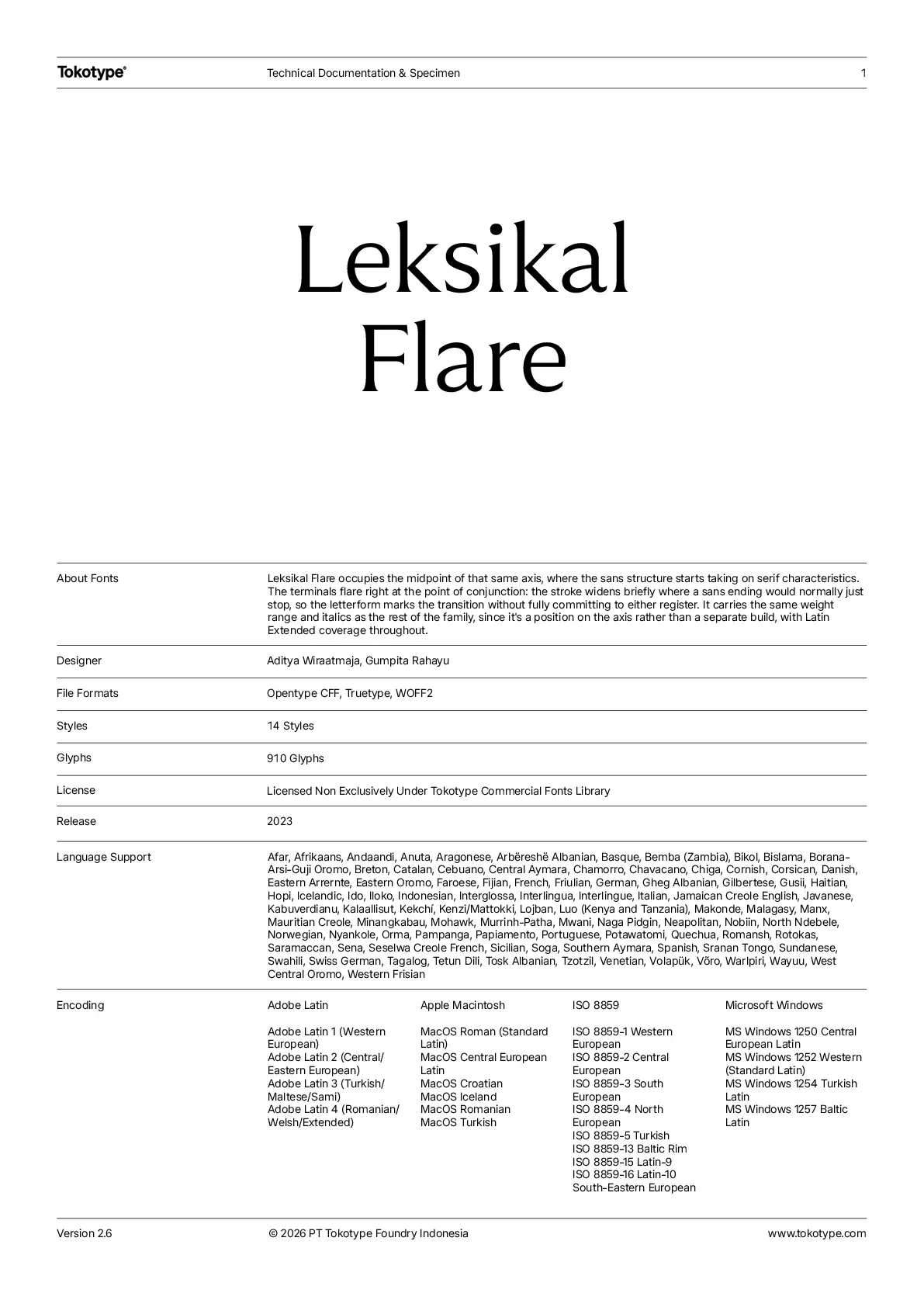
Leksikal Flare occupies the midpoint of that same axis, where the sans structure starts taking on serif characteristics. The terminals flare right at the point of conjunction: the stroke widens briefly where a sans ending would normally just stop, so the letterform marks the transition without fully committing to either register. It carries the same weight range and italics as the rest of the family, since it's a position on the axis rather than a separate build, with Latin Extended coverage throughout. That makes it usable as its own voice, a register that sits between Sans and Serif rather than a stop on the way to one.

Font Information

Collections

14 Styles – Variable

Version

2.006

File Format

OTF, TTF, WOFF2

Designers

Gumpita Rahayu

PDF Specimen

PDF Specimen

Language Supports

Afar
Afrikaans
Andaandi
Dongolawi
Anuta
Aragonese
Arbëreshë Albanian
Basque
Bemba (Zambia)
Bikol
Bislama
Borana-Arsi-Guji Oromo
Breton
Catalan
Cebuano
Central Aymara
Chamorro
Chavacano
Chiga
Cornish
Corsican
Danish
Eastern Arrernte
Eastern Oromo
Faroese
Fijian
French
Friulian
German
Gheg Albanian
Gilbertese
Gusii
Haitian
Hopi
Icelandic
Iloko
Indonesian
Italian
Jamaican Creole English
Javanese
Kabuverdianu
Kalaallisut
Kekchí
Kenzi
Mattokki
Luo (Kenya and Tanzania)
Makonde
Malagasy
Manx
Mauritian Creole
Minangkabau
Mohawk
Murrinh-Patha
Mwani
Naga Pidgin
Neapolitan
Nobiin
North Ndebele
Norwegian
Nyankole
Orma
Pampanga
Papiamento
Portuguese
Potawatomi
Quechua
Romansh
Rotokas
Saramaccan
Sena
Seselwa Creole French
Sicilian
Soga
Southern Aymara
Spanish
Sranan Tongo
Sundanese
Swahili
Swiss German
Tagalog
Tetun Dili
Tosk Albanian
Tzotzil
Venetian
Võro
Warlpiri
Wayuu
West Central Oromo
Western Frisian
Zapotec

Related Family

Leksikal Sans

Learn More

14 Styles – Variable

Leksikal Serif

Learn More

14 Styles – Variable

Download Trial Fonts for Free

Take our fonts for a spin! Enter your name, email address, and the font of your choice. Then, you can download it directly and start testing it for your project.