Frasa Display Font Family & Specimen - Tokotype

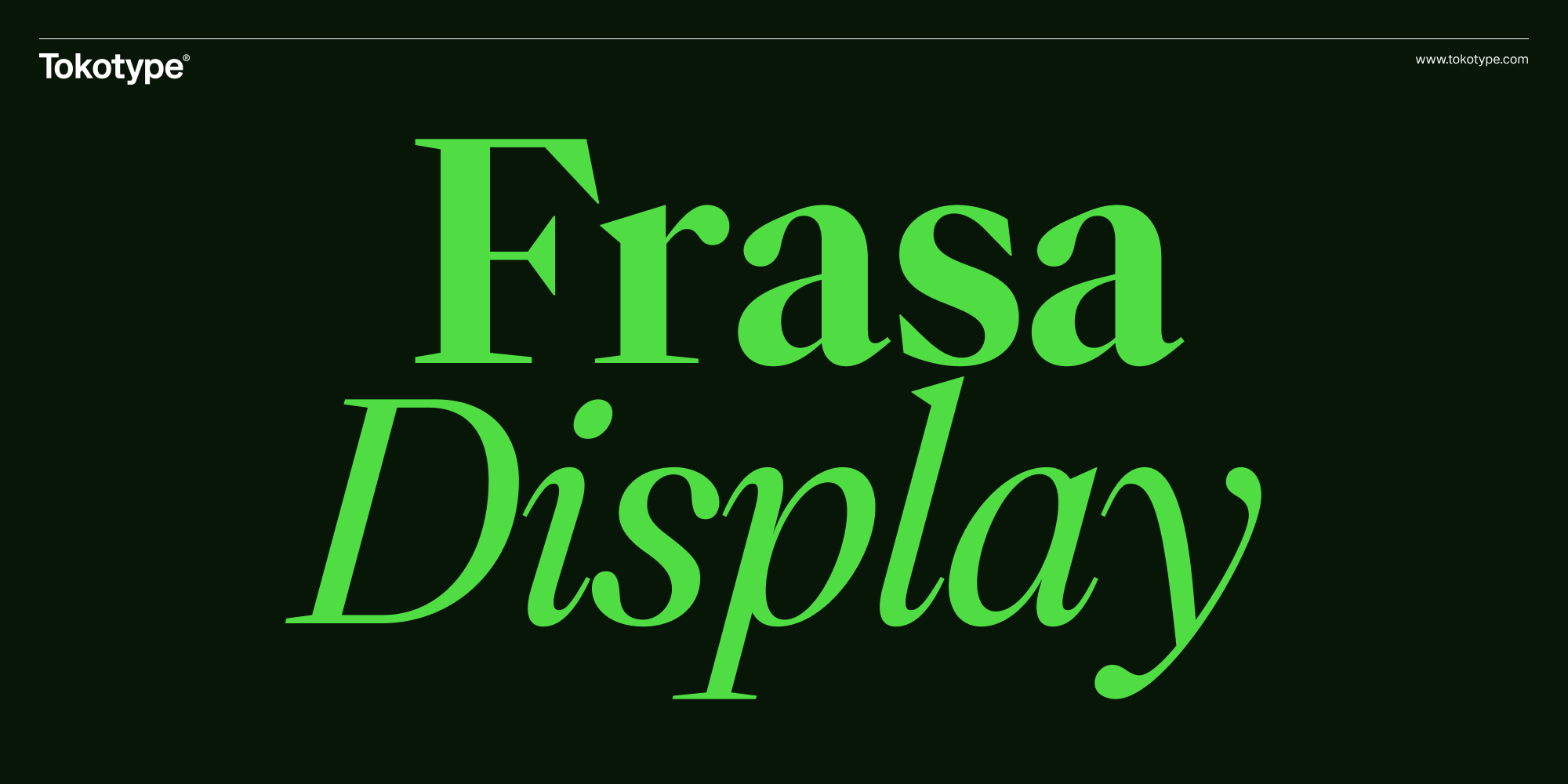
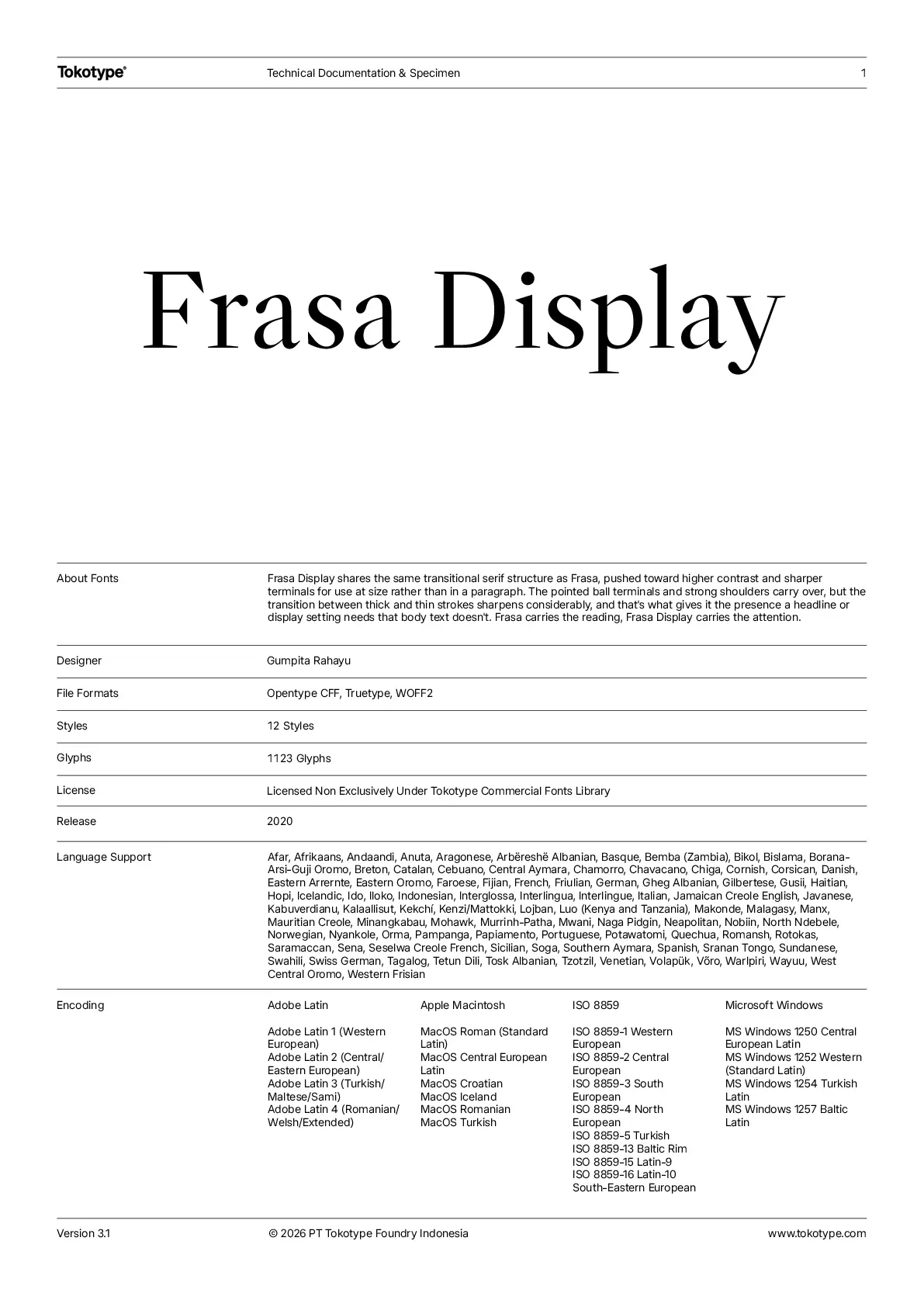
Frasa Display

Frasa Display

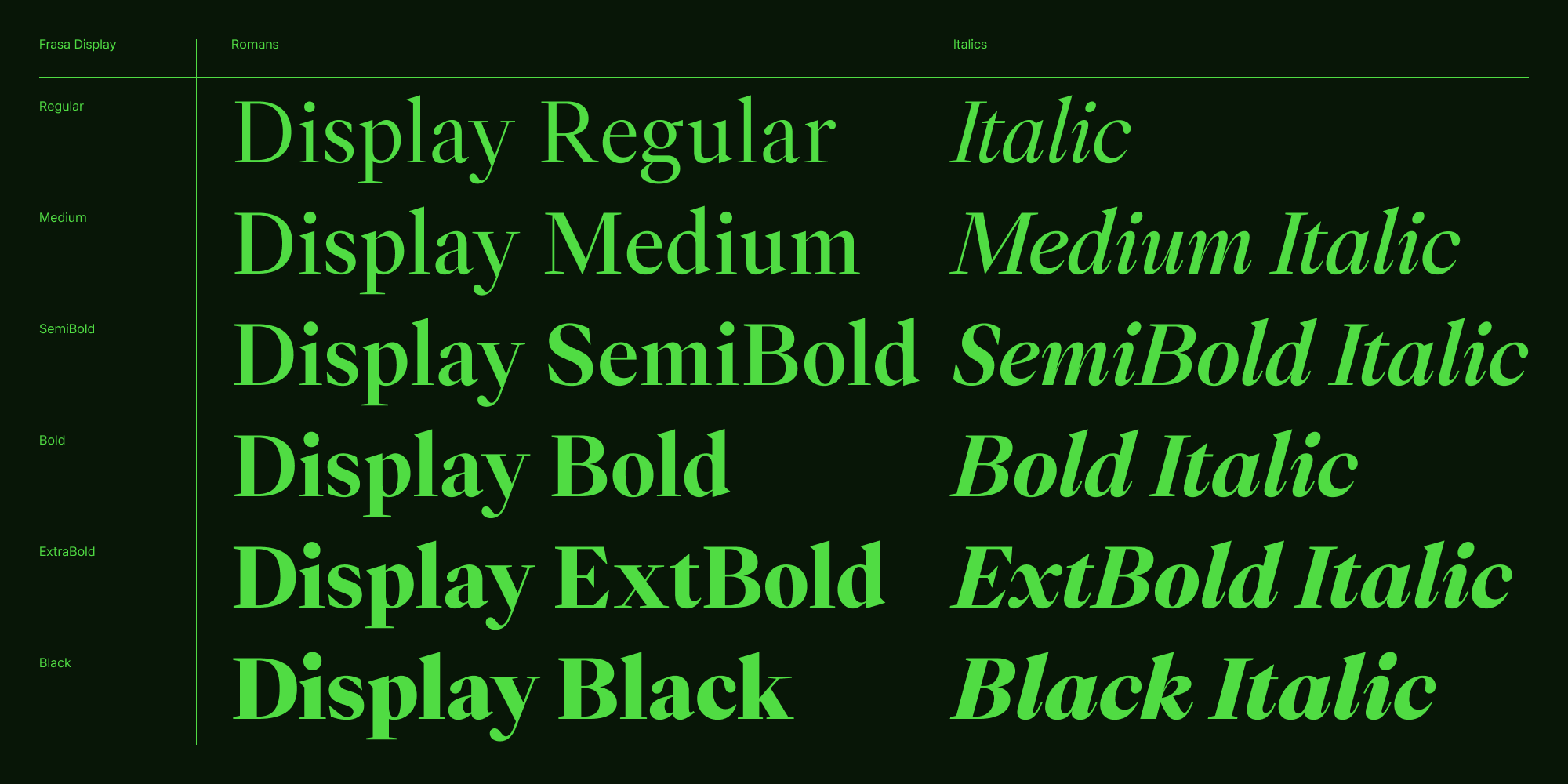
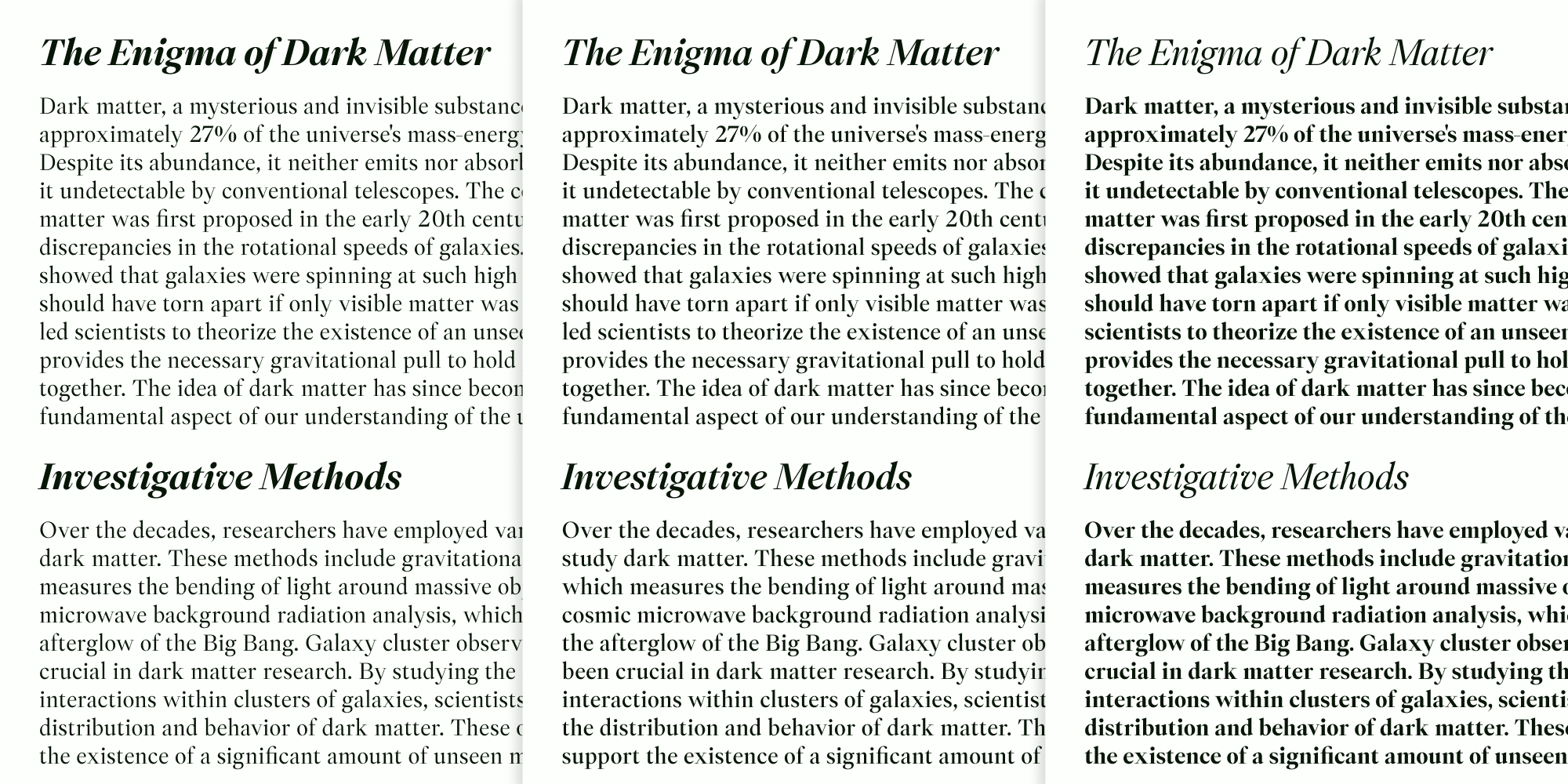
Frasa Display Styles

Uprights

Regular

Medium

SemiBold

Bold

ExtraBold

Black

Frasa Display Styles

Italics

Italic

Medium Italic

SemiBold Italic

Bold Italic

ExtraBold Italic

Black Italic

Variable

400px

0px

1em

Quirkiness
Variable Italic

400px

0px

1em

Pyromaniac

400px

0px

1em

Middlemen

400px

0px

1em

Proficiencies

48px

0px

1.2em

The phrase as a unit of linguistic structure has long been an essential concept in grammatical analysis. It refers to a cluster of words that function together with distinct properties and functions within a sentence.

48px

0px

1.2em

A phrase can take many forms, each with its unique characteristics. Some may contain a single modifying adjective or adverb, while others may comprise multiple clauses or noun phrases working in tandem.

24px

0px

1.4em

Phrases as linguistic building blocks have long fascinated grammarians and linguists, but their influence extends far beyond the realm of language itself. In typography, phrases become a crucial element in weaving narratives that convey complex ideas and emotions. A phrase can be thought of as a unit of meaning within a sentence, yet it can also operate as an autonomous entity, with its own distinct rhythmic and sonic qualities. Consider, for example, the poetry of Walt Whitman, where phrases like "Do I contradict myself? Very well then, I contradict myself" create a sense of dynamic tension that propels the reader forward (Leaves of Grass). In such cases, the phrase becomes not only a grammatical unit but also a performative one, with its cadence and intonation working together to convey the poet's message. This synergy between form and content has long been recognized in typography as well, from the sonorous block capital titles of Renaissance broadsides to the elegant cursive phrases that adorn art nouveau posters. The craft of shaping phrases is equally relevant in the digital age, where they can be fragmented, reassembled, or even created anew using advanced design tools. Nevertheless, the same tactile and sensory characteristics that make print-based typography so compelling remain essential to communicating ideas effectively. This tension between traditional craftsmanship and digital innovation has led many designers to explore the potential of phrases as an expression of cultural and social values. Consider, for instance, the pioneering work of designers like Herbert Bayer and Lucian Bernhard, who saw in typography a powerful tool for advancing modernist ideals of clarity and simplicity. By reimagining phrases in bold new forms that emphasized functionality over ornamentation, they created typographic systems that not only reflected but also influenced the spirit of their times (Deutsche Mark).

16px

0px

1.4em

Phrases as linguistic building blocks have long fascinated grammarians and linguists, but their influence extends far beyond the realm of language itself. In typography, phrases become a crucial element in weaving narratives that convey complex ideas and emotions. A phrase can be thought of as a unit of meaning within a sentence, yet it can also operate as an autonomous entity, with its own distinct rhythmic and sonic qualities. Consider, for example, the poetry of Walt Whitman, where phrases like "Do I contradict myself? Very well then, I contradict myself" create a sense of dynamic tension that propels the reader forward (Leaves of Grass). In such cases, the phrase becomes not only a grammatical unit but also a performative one, with its cadence and intonation working together to convey the poet's message. This synergy between form and content has long been recognized in typography as well, from the sonorous block capital titles of Renaissance broadsides to the elegant cursive phrases that adorn art nouveau posters. The craft of shaping phrases is equally relevant in the digital age, where they can be fragmented, reassembled, or even created anew using advanced design tools. Nevertheless, the same tactile and sensory characteristics that make print-based typography so compelling remain essential to communicating ideas effectively. This tension between traditional craftsmanship and digital innovation has led many designers to explore the potential of phrases as an expression of cultural and social values. Consider, for instance, the pioneering work of designers like Herbert Bayer and Lucian Bernhard, who saw in typography a powerful tool for advancing modernist ideals of clarity and simplicity. By reimagining phrases in bold new forms that emphasized functionality over ornamentation, they created typographic systems that not only reflected but also influenced the spirit of their times (Deutsche Mark).
Solid Outline
Glyph Name
Character Name
Unicode Decimal
Unicode Hex

About Font

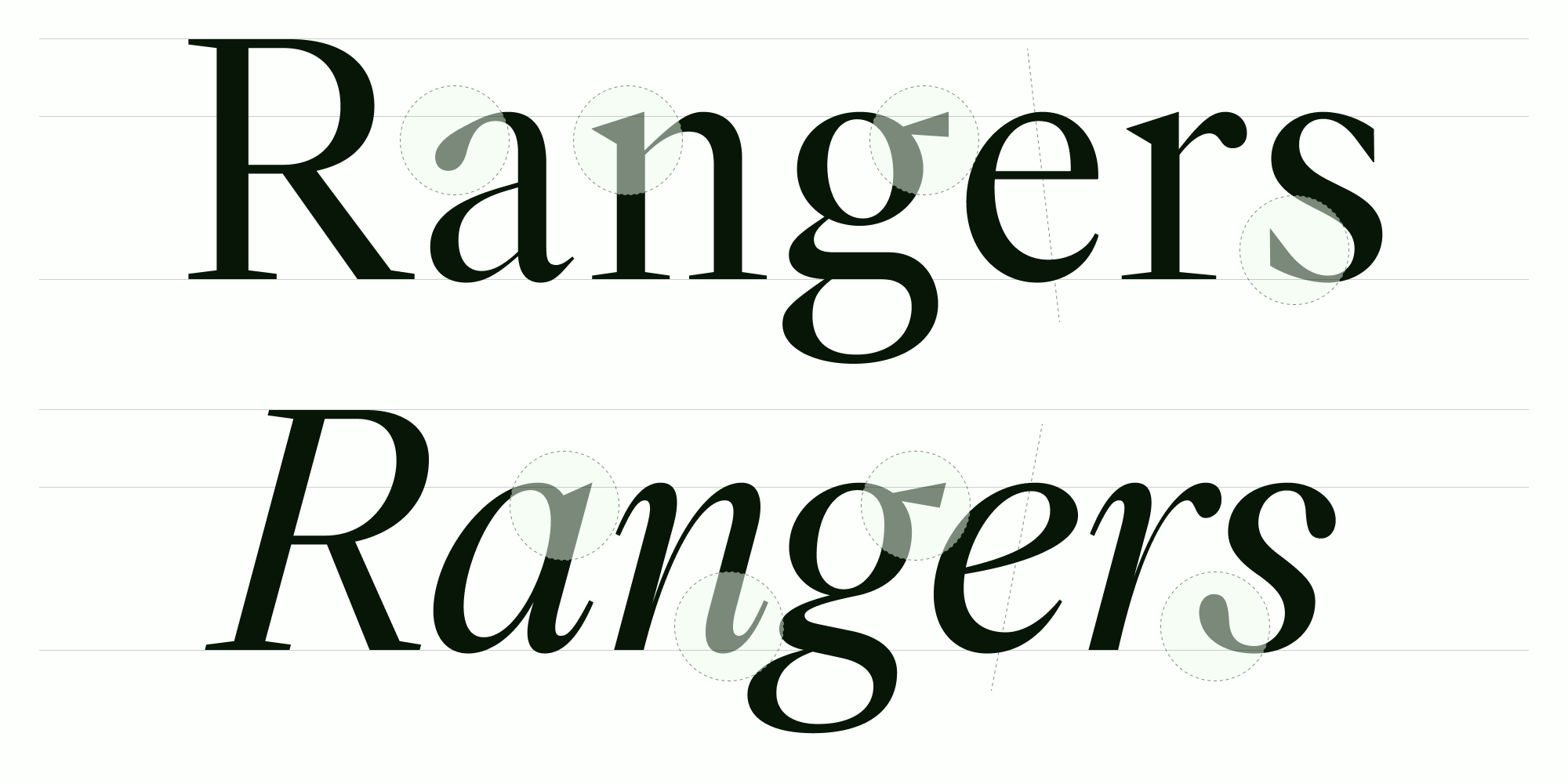
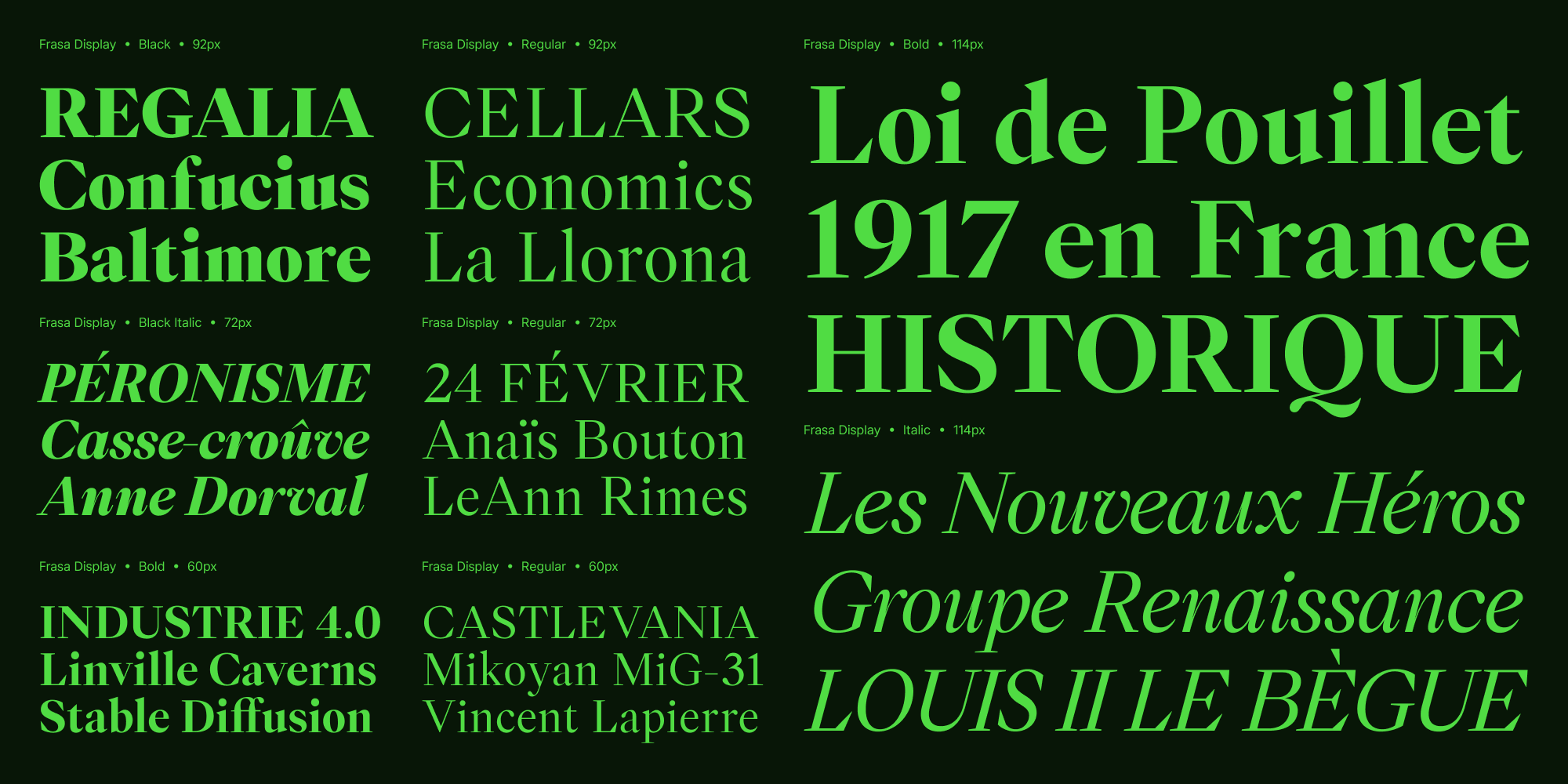
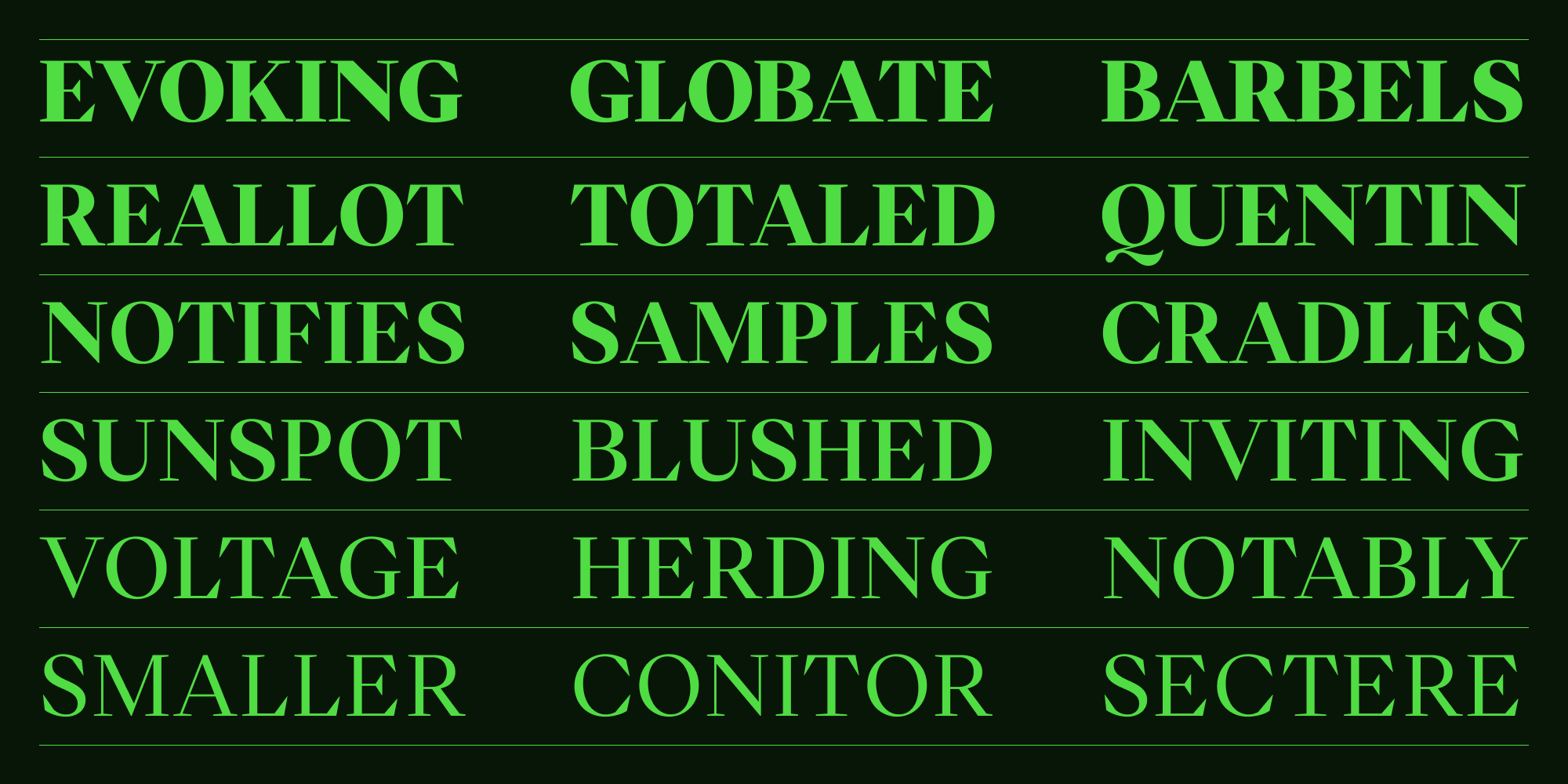
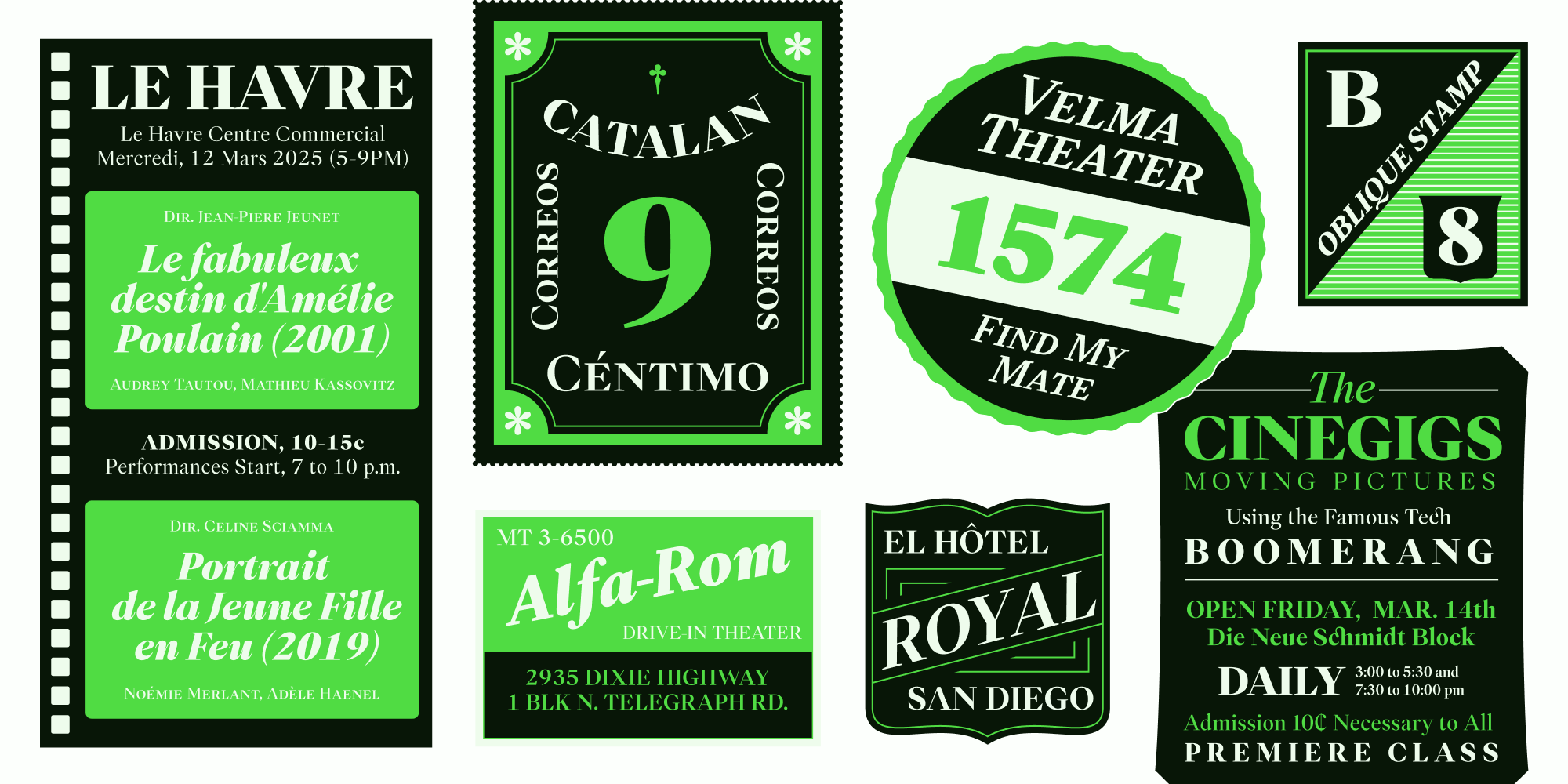
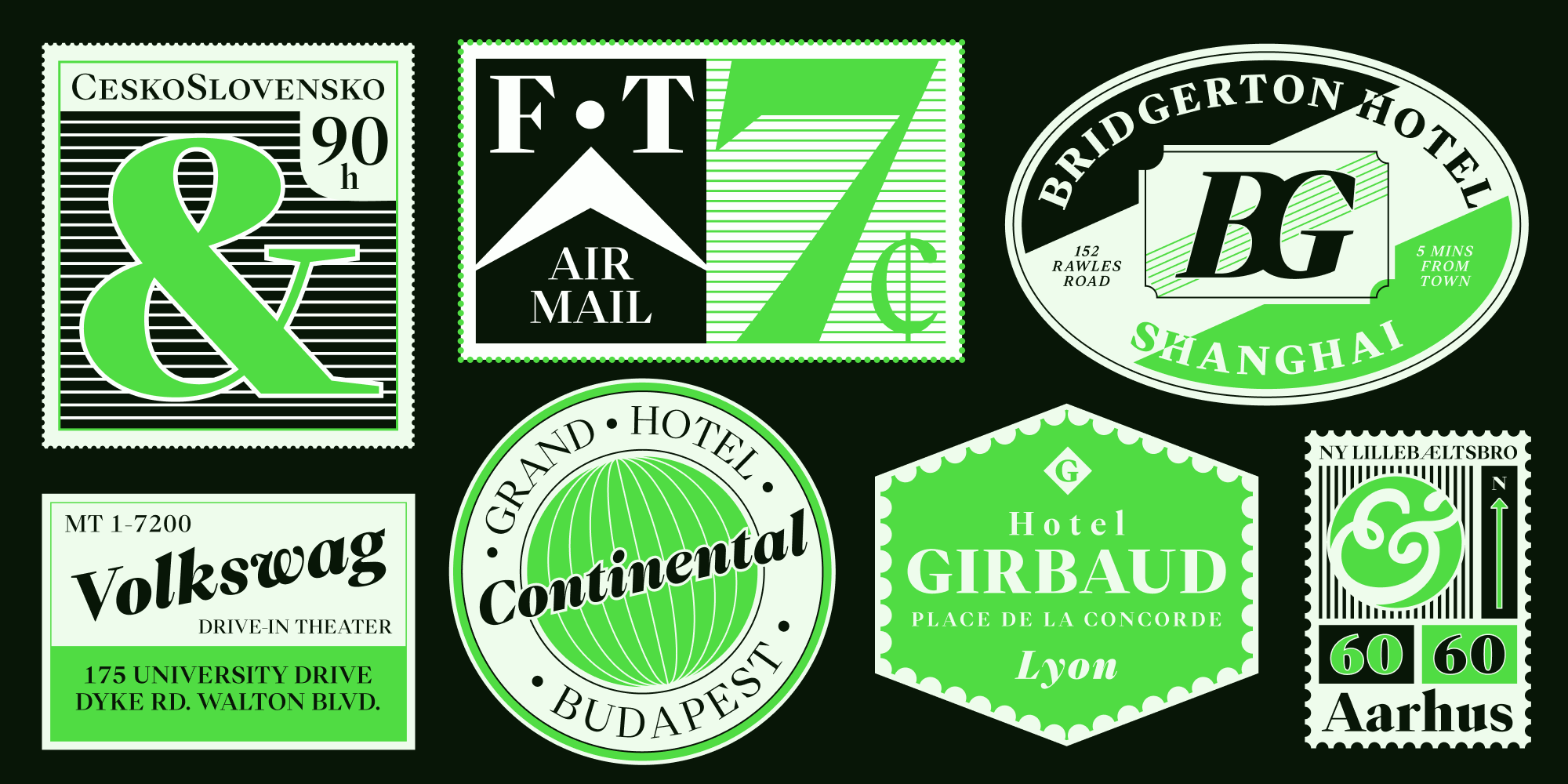
Complementing the core family, Frasa Display is a high-contrast, denser variant tailored for striking display use. It refines the proportions and enhances the contrast to deliver a sharper, more dramatic presence—perfect for headlines, branding, and impactful typography where elegance are key. With more flexibility on variable fonts, this family can shift between Frasa moderate contrast into Frasa Display with high contrast seamlessly.

Font Information

Collections

12 Styles – Variable

Version

3.2

File Format

OTF, TTF, WOFF2

Designers

Gumpita Rahayu

PDF Specimen

PDF Specimen

Language Supports

Afar
Arvanitika Albanian
Eastern Arrernte
Afrikaans
Aragonese
Asturian
Anuta
Southern Aymara
Central Aymara
North Azerbaijani
Bemba (Zambia)
Bikol
Bislama
Bosnian
Breton
Catalan
Chavacano
Cebuano
Chiga
Chamorro
Chickasaw
Montenegrin
Cornish
Corsican
Seselwa Creole French
Danish
German
Lower Sorbian
Jola-Fonyi
Basque
Faroese
Fijian
French
Western Frisian
Friulian
Borana-Arsi-Guji Oromo
West Central Oromo
Gilbertese
Manx
Swiss German
Wayuu
Gusii
Gwichʼin
Eastern Oromo
Haitian
Hopi
Upper Sorbian
Hungarian
Igbo
Iloko
Indonesian
Icelandic
Italian
Jamaican Creole English
Javanese
Kalaallisut
Makonde
Kabuverdianu
Kekchí
Kaingang
Kirmanjki
Latgalian
Ganda
Luo (Kenya and Tanzania)
Mauritian Creole
Malagasy
Maltese
Mohawk
Maori
Creek
Murrinh-Patha
Kala Lagaw Ya
Naga Pidgin
Neapolitan
North Ndebele
Central Nahuatl
Norwegian
Nyankole
Orma
Pampanga
Papiamento
Portuguese
Potawatomi
Quechua
Cook Islands Māori
Romansh
Rotokas
Sicilian
Sena
Northern Sami
Samoan
Southern Sotho
Spanish
Saramaccan
Sranan Tongo
Serbian
Sundanese
Swahili
Atayal
Tetun Dili
Teso
Tagalog
Tokelau
Tsakhur
Talysh
Tonga (Tonga Islands)
Tzotzil
Uighur
Venetian
Vietnamese
Võro
Walser
Warlpiri
Mwani
Soga
Minang
Yoruba
Zapotec

Related Family

12 Styles – Variable

Download Trial Fonts for Free

Take our fonts for a spin! Enter your name, email address, and the font of your choice. Then, you can download it directly and start testing it for your project.